Daniel Victorino
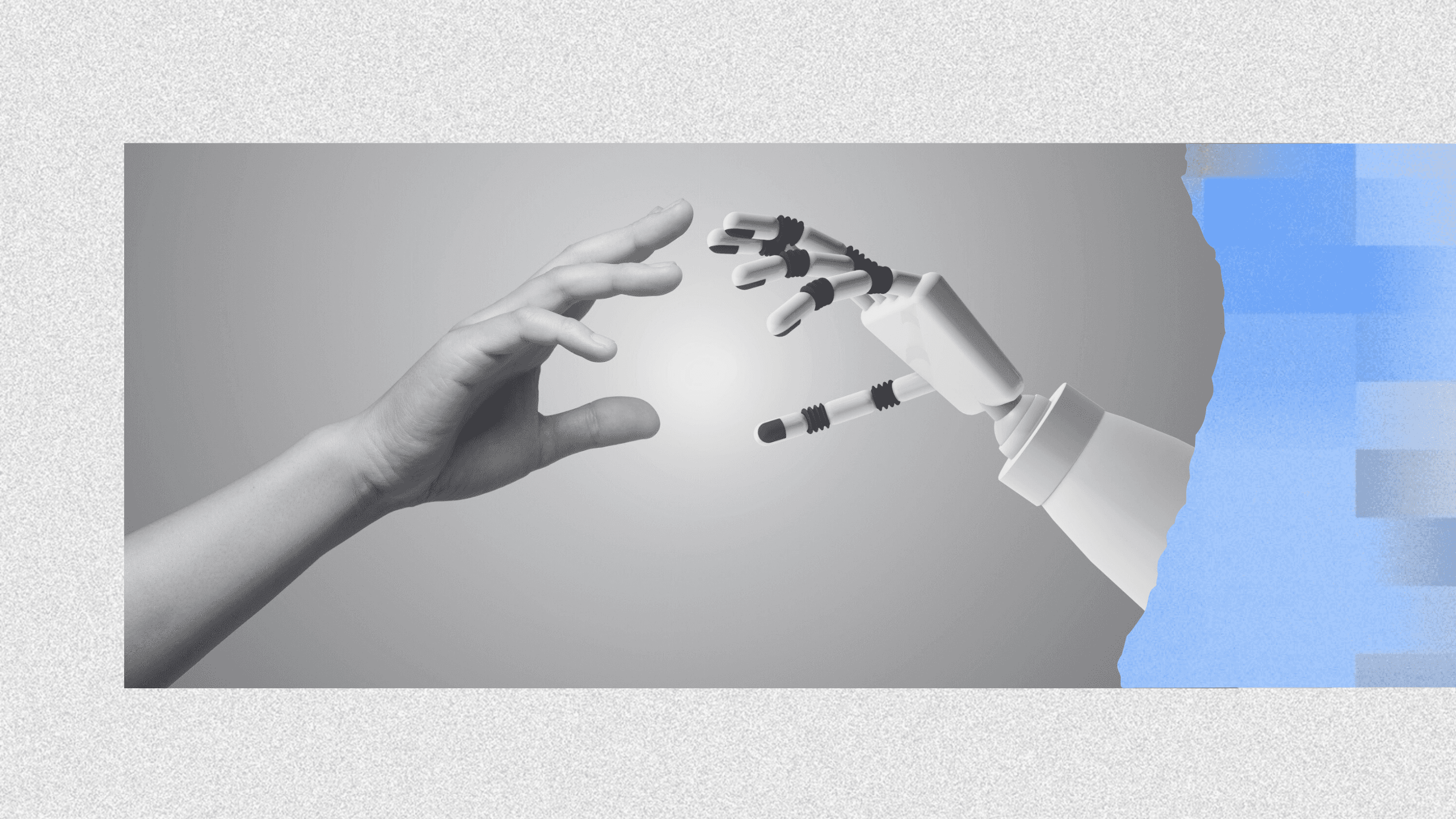

The discussion about artificial intelligence in companies still often falls into a conceptual trap: human versus AI. On one side, fear of replacement; on the other, the promise of total automation. This opposition is simplistic and limits the true strategic potential of the technology.
At Galaxies, this view guides both the company’s philosophy and product development. The strongest, most consistent, and most adaptable decisions emerge when human context, judgment, and creativity combine with AI speed, scale, and predictive intelligence.
The false dichotomy: human vs. AI
The replacement narrative places humans and AI on opposite sides. In this logic, AI is either a threat to human judgment or a solution that eliminates the need for human decision-making.
Both views are wrong.
Strategic decisions are not only calculations. They involve cultural context, scenario reading, long-term goals, organizational values, and ethical responsibility. At the same time, modern-market complexity exceeds isolated human analytical capacity.
Co-authorship emerges as an alternative to this false dichotomy. Instead of competing, humans and AI collaborate, each operating where it is strongest. AI expands the view; humans provide meaning, direction, and responsibility.
The human role: strategy, context, and judgment
Even in the most advanced technology environments, the human role remains central. People define what matters, why it matters, and which path makes sense for the organization.
Human responsibilities include:
Define strategic objectives and priorities.
Interpret social, cultural, and organizational context.
Exercise ethical judgment and final responsibility.
Connect short-term decisions to long-term vision.
Strategic intuition, built through experience and repertoire, is not replaceable by algorithms. It becomes more valuable when supported by predictive intelligence.
The AI role: speed, scale, and complexity
Artificial intelligence enters where humans do not scale. It processes large volumes of data, simulates multiple scenarios simultaneously, and evaluates probabilities at impossible human speed.
In decision-making, AI contributes by:
Simulate the impact of different choices.
Analyze risk and probability of success.
Identify non-obvious patterns.
Reduce uncertainty in complex environments.
It is important to reinforce: AI does not decide alone. It accelerates decision processes, expands the field of view, and reduces cognitive bias, but final responsibility remains human.
Co-authorship cases in marketing and product
Human + AI co-authorship is already practical across several areas.
Marketing creative teams use simulations to test messages, narratives, and positionings before execution. AI anticipates likely reactions; humans define creative strategy, tone, and brand coherence.
Product teams validate roadmaps and priorities with predictive support. AI simulates acceptance, adoption, and friction; humans decide what to build, when to launch, and how to evolve value.
In growth, co-authorship helps prioritize hypotheses based on simulated impact and risk. AI organizes possibilities; humans choose where to invest and interpret results.
In every case, decision quality improves not because AI “commands,” but because collaboration reduces uncertainty and accelerates learning.
How companies build a co-authorship culture
Co-authorship is not only technology; it is culture. Companies adopting this model must go beyond tool implementation and change how decisions are made.
Key practices include:
Internal education so teams understand AI’s limits and potential.
Trust in simulations without abandoning human critical sense.
Hybrid processes where data, simulation, and judgment coexist.
Clear roles reinforcing that AI supports, but does not replace, decisions.
Mature organizations understand that competitive advantage is not in automating everything, but in deciding better and faster, with responsibility.
Co-authorship as the new decision standard
The future of strategic decision-making is collaborative. Leading companies neither delegate decisions to AI nor ignore its analytical potential.
In this model, AI expands possibilities and humans choose paths. Technology offers predictability; human judgment offers purpose.
This philosophy guides Galaxies and Nexus development: decisions built in co-authorship, where strategy, context, and predictive intelligence work together.
Because the best decisions are not human or artificial. They are co-signed by people and AI in continuous collaboration.



Galaxies